Getting the right mix: Agroforestry as an effective strategy to boost Davao de Oro’s cacao industry
By Erwin Albios
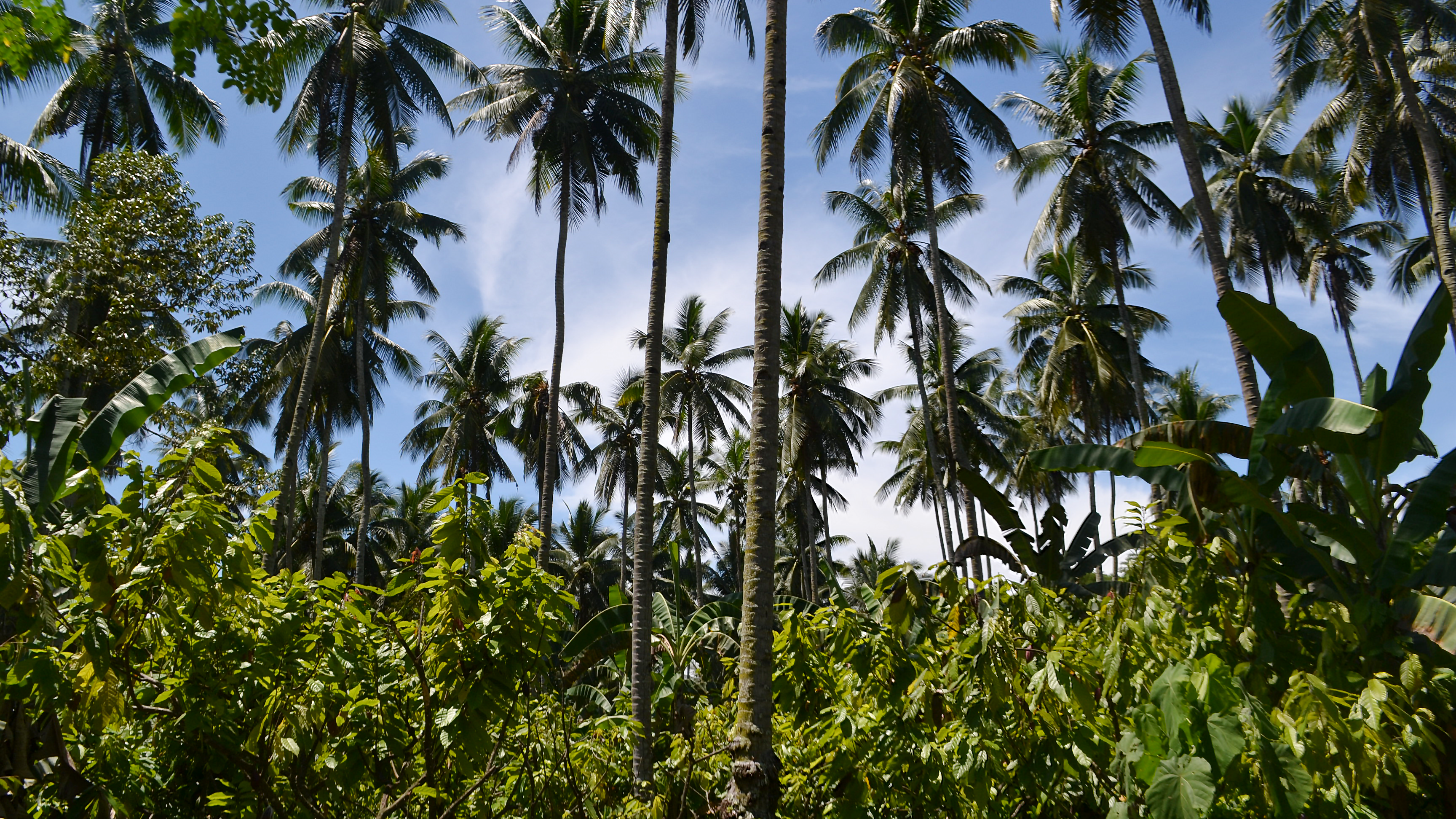
ICRAF researchers recently found that Davao de Oro is moderately suitable for cacao production, showing the province’s huge potential. But there is room for improvement in current cacao management practices. In terms of strategy, specialists suggest going back to basics—agroforestry.
Arriving in the Philippines around the 1670s from Mexico through the Manila-Acapulco Galleon Trade, cacao was planted initially on and around the largest island of Luzon, and in Central Visayas, before spreading through the country. Most cacao plantations ended up being established in the southern part of the country – the land of Mindanao, specifically in Davao Region.
Cacao is a popular commodity in the Philippines – the beans are often processed into a “tablea,” a traditional chocolate confection used in making desserts, and are also made into cocoa, cacao powder, cacao butter, and cacao nibs. The country has a competitive advantage for cacao production within Southeast Asia due to its strategic location, good climatic conditions, and favorable soil. Despite this, domestic cacao production fails to meet the current requirements of the growing cacao-based industry, meaning the country resorts to importing beans from elsewhere.
Better together: institutionalizing a multi-stakeholder partnership for Davao de Oro’s cacao industry
By Ma. Athea Menguito
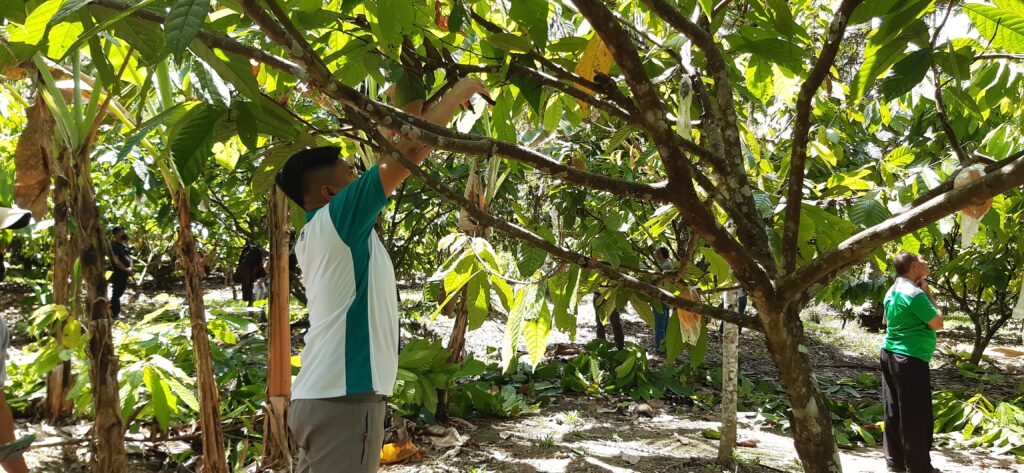
As cliché as it may sound, synergy between stakeholders from a range of sectors is necessary for any industry to thrive – including the cacao industry of Davao de Oro in the Philippines.
Since 2020, World Agroforestry (ICRAF) has been implementing the Sustainable Farming in Tropical Asian Landscapes (SFITAL) Project in the province of Davao de Oro (formerly Compostela Valley) in Mindanao, Philippines. The project is envisioned to promote environmentally sustainable and economically beneficial cacao production in the province, which could also contribute to the country’s efforts to attain its target yield of 100,000 metric tons by the year 2022. Specifically, it aims to assist the smallholders, who are both entrepreneurs and environmental stewards, to benefit from well-functioning environments for sustainable commodity value chains in Asia.